

The Fall Volunteer Background Check Checklist for Churches, Youth Sports & Schools
With school, church, and fall sports starting within weeks, now is the time to screen volunteers — not after they’ve already started working with kids. This checklist covers who to screen, what a volunteer background check should include, whether to re-check returning volunteers, and how to stay FCRA-compliant, so your program is ready before the first child walks in.
When should you start screening fall volunteers?
Now. Background checks take time — authorization, searches, and any needed review can span several business days. A last-minute rush means unscreened adults working with children while results are still pending. Starting three to four weeks before your season opens gives you room to screen everyone properly, including returning volunteers who need a refresh.
What should a volunteer background check include?
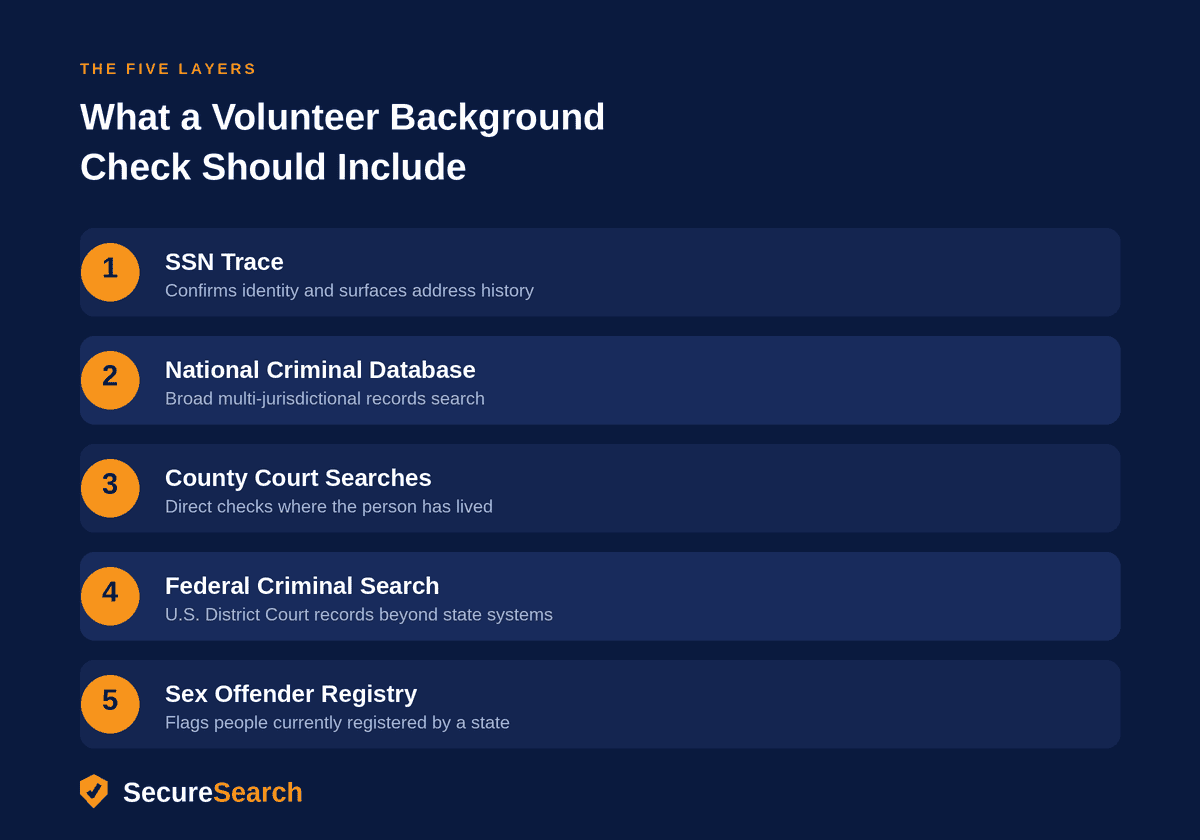
A thorough youth-serving background check is layered — no single search catches everything.
A responsible youth-serving background check is layered, not a single database lookup. At minimum it should include:
- An SSN trace to confirm identity and surface address history
- A multi-jurisdictional/national criminal database search
- County criminal court searches in the counties where the person has lived
- A sex offender registry check
For higher-trust roles, add motor vehicle records for anyone driving children, plus employment or reference verification. Not sure what a registry check does and doesn’t cover? See our U.S. Sex Offender Registry Coverage Map.
Do you need to re-screen returning volunteers?
Yes. A clearance from a year or two ago doesn’t reflect anything that has happened since. Records change — an arrest or conviction after the last check won’t appear unless you look again. Many churches and leagues re-screen on a fixed cycle, commonly once a year or every two to three years. Fall onboarding is a natural re-screening checkpoint, so build it into your season prep rather than treating last year’s check as permanent.
How to stay FCRA-compliant when screening volunteers
When you use a screening company, volunteer background checks fall under the Fair Credit Reporting Act. Compliance comes down to two things. First, give each applicant a clear, standalone disclosure and get their written authorization before you screen. Second, if a report might lead you to turn someone away, follow the two-step adverse action process: send a pre-adverse notice with a copy of the report and a summary of rights, wait a reasonable period, then send a final notice. Getting this right protects the applicant and shields your organization from liability.
Screening and training: the fall onboarding pairing
Fall is the one stretch when programs onboard adults in bulk, which makes it the ideal moment to pair screening with abuse-prevention training. A background check tells you who someone was. Training shapes how every adult behaves going forward — recognizing grooming, honoring boundaries, and knowing exactly how to report a concern. Together they close gaps that neither closes alone, which is why responsible programs do both before the season, not one or the other.
Know your state’s requirements
Screening rules for youth-serving volunteers vary by state, and some sports and school settings carry their own mandates. Check what applies to you on our youth sports background check requirements by state resource before you finalize your fall process.
Frequently asked questions
How long does a volunteer background check take?
Most complete within a few business days, though county court searches can take longer in some jurisdictions. Start three to four weeks before your season to leave a safe margin.
How much does a volunteer background check cost?
Cost depends on the searches included. SecureSearch has no contracts, no minimums, and no setup fees, so organizations pay only for what they run. See our pricing for details.
Do churches and nonprofits legally have to run background checks?
Requirements vary by state and setting, and many insurers and denominations require screening as a condition of coverage or affiliation. Regardless of mandate, screening every adult who works with children is a widely recognized safety standard.
Should we re-screen volunteers every year?
Re-screening on a regular cycle is best practice. Many organizations re-check annually or every two to three years. Fall onboarding is a natural checkpoint to build it into.
About the author. Steve Durie is the founder of SecureSearch and Safeguard from Abuse®, with more than 20 years in background screening and child protection. He is the author of Pillar of Protection, The Volunteer Safety Guide, and Guardians of Grace.